
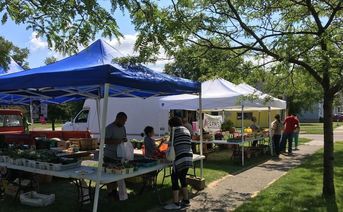
 Farmers’ market incentive programs, in which the cost of fresh produce is subsidized for Supplemental Nutrition Assistance Program (SNAP) participants, hold promise as a way to increase fruit and vegetable consumption for low-income households which have lower intakes of fruits and vegetables and experience disproportionately higher rates of obesity, chronic disease, and food insecurity than higher income households.
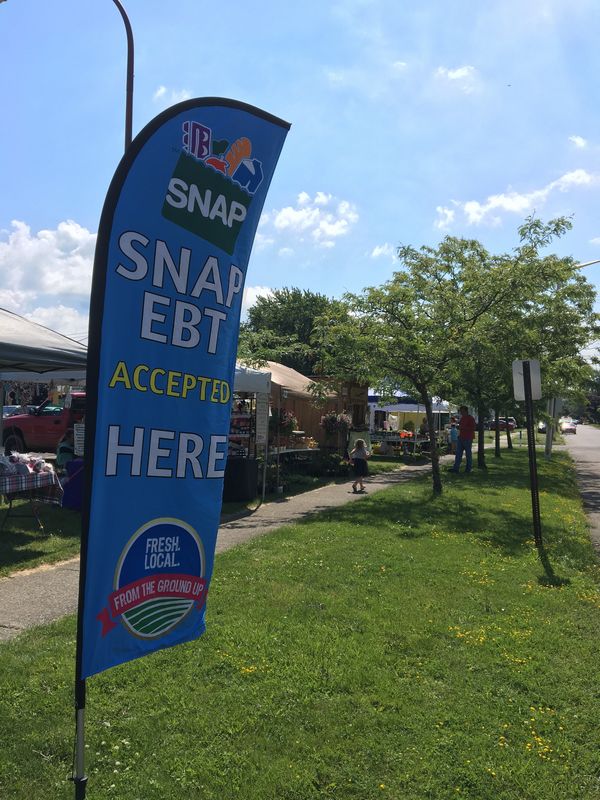
Double Up Food Bucks (DUFB) is a farmers’ market incentive program in which SNAP participants receive a dollar toward the purchase of local produce for every dollar of benefits spent at participating markets. The program aims to increase SNAP recipients’ access to and consumption of fruits and vegetables, increase local farmers’ customer base, and retain more food dollars in the local economy.
In the Double Up Food Bucks – Cost Effectiveness Analysis (DUFB-CEA) study, we measured the effectiveness of DUFB in improving program participants’ food security status and fruit and vegetable intake in Western New York and performed formal economic analyses of the program’s implementation costs. This data was used together to calculate the program’s overall cost-effectiveness, or cost per unit change in each outcome: household food security status and daily fruit and vegetable intake.
Outcomes on this work can be found here: A qualitative evaluation of Double Up Food Bucks Farmers’ Market Incentive Program access
Funding: Engaged Cornell and Institute for Social Sciences at Cornell University


 Seguin-Fowler Research